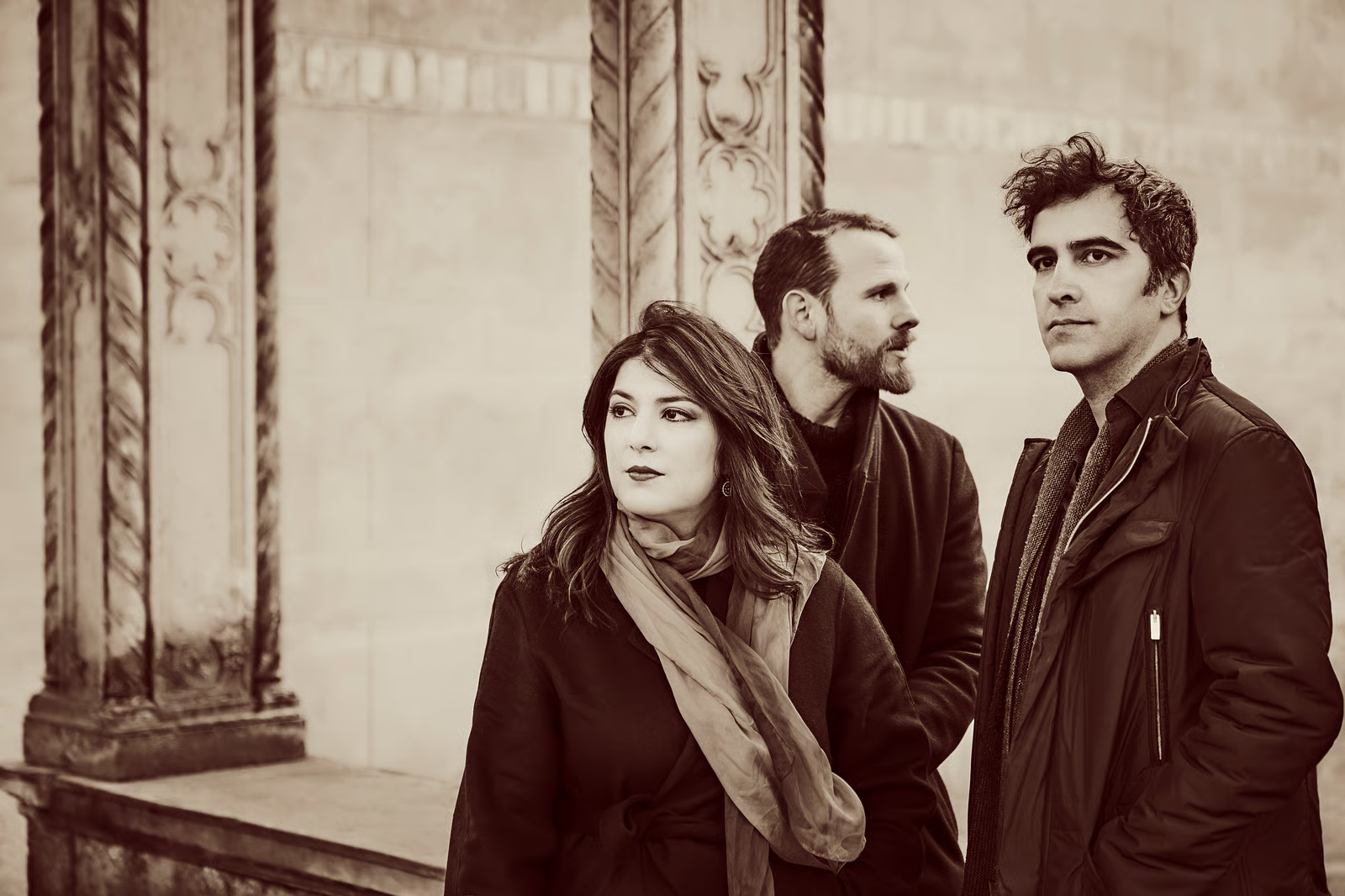
© Reinecke
Joolaee Trio
Border crossers in the morning breeze
7 to 9 p.m., break
Grenzgänger im Morgenwind on piano, kamancheh and percussion
The music is so diverse, exciting and unusual that it is difficult to describe. The combination of piano, kamancheh and diverse percussion creates a world music sound that is second to none. Misagh Joolaee is one of the most sought-after virtuosos on the kamancheh, the traditional violin-like string instrument from ancient Persia. Pianist Schaghajegh Nosrati drives the tides of this ocean of sound higher and keeps the waves alive, while percussionist Sebastian Flaig sets the heartbeat on his frame drum with muffled beats and sharp accents. The Joolaee trio combines tradition and modernity and is stylistically extremely diverse and variable with a poignant density of expression. Just as it should ideally be in jazz.
In its concert, also entitled “Morgenwind”, the Joolaee Trio presents rousing original compositions by all three musicians, including Be Hich Diyar — “belonging to no home” — by Misagh Joolaee, Fragile Balance by Sebastian Flaig and the Fantasy and Fugue by Schaghajegh Nosrati.
Contributors
Misagh Joolaee
Kamancheh
Schaghajegh Nosrati
Piano
Sebastian Flaig
Percussion
Program
The Joolaee Trio has given its debut CD the title “Morning Wind”, after a poem from the Divan by the Persian poet Hafiz (14th century), who is famous in both East and West. Like the morning wind — in Persian poetry it blows from the East, has a fertilizing effect, holds the secrets of lovers and brings spring — the seasonal one. The western fugue technique or the Persian radif repertoire with its melodic figures, ornaments and melismas, for example, come into play. The instrumentalists also change roles: The kamancheh, for example, does not function as a melodic instrument throughout, but sometimes takes on rhythmic-percussive and harmonic parts. The piano is also used melodically, harmonically and percussively. The percussionist, in turn, has melodic and tone-painting tasks in between, especially in the fantasy and fugue on a Persian mode, in which the stone marimba, an extremely rarely heard instrument, is used.
We see ourselves as border crossers who look across the lines. Because there is something there that we may not yet know.